
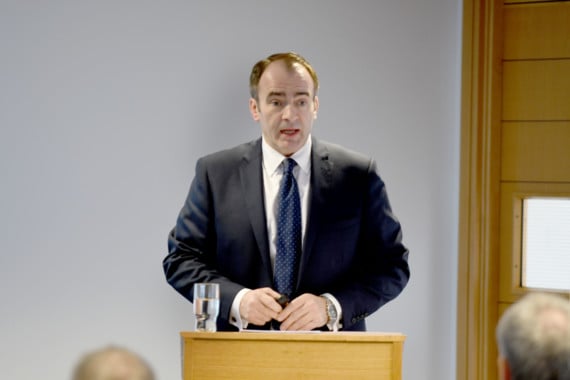
’We are not about the nice to haves - spending must be judged on a need to have.’
That was the message from Alfred Cannan as he confirmed that department budgets will remain tightly controlled - and the 1% cap on the pay budget will stay in place for now.
But he said the better than expected results provided more flexibility to direct some additional spending - and if the strong economic performance continues, there was a prospect of the pay cap rising to 2% from 2019-20 onwards.
He told Tynwald: ’This means that should pay awards be made at a level over and above the cap, departments will need to find savings elsewhere within their allocation.’
 New organ donation law to come into force as island urged to ‘make informed choice’
 Department outlines new education priorities as Tynwald receives updated plan
 Peel Commissioners says LegCo measures will mitigate issues in local government bill
.jpeg?width=209&height=140&crop=209:145,smart&quality=75) Tynwald rejects referendum on Isle of Man's Net Zero policy
Tynwald rejects referendum on Isle of Man's Net Zero policyMr Cannan unveiled an extra £13.8m investment in public services.
Ths includes an increase of £5.5m for Health and Social Care to help with on-going cost pressures.
The Treasury Minister accepted £5.5m may not seem enough but said this government has given the DHSC a combined £16.5m of additional revenue funding in the last two years together with £20.6m of supplementary votes.
He said: ’It is vitally important we achieve a balance between providing the funding that is required, but also to ensure there is the motivation to utilise these funds in the most efficient way.
’So, £37.1m of additional funds - 18.5% of their net £200m budget in two years. Do not tell me that this government is not placing the highest priority on health.’
He said the DHSC has agreed a target cost improvement plan of £7m overall for 2018-19 including £5m within its hospitals division.
Mr Cannan also awarded an extra £3.1m for the Department of Infrastructure, including an additional £1.1m to tackle potholed roads.
The remaining £2m will go on measures including investment into the operation of the horse trams.
Finally, as part a commitment to improve the lot of working families, Mr Cannan announced £1.5m extra funding for pre-school credits.
This will enable funding for children to attend privately run pre-schools for 20 hours per week during the academic year and means pre-school credits have risen from £1,700 per child to £3,420.
’Intervention in early years produces benefits for children, their families, the communities in which they are located and society as a whole. This is more good news for our working families,’ Mr Cannan said.
Comments
This article has no comments yet. Be the first to leave a comment.