
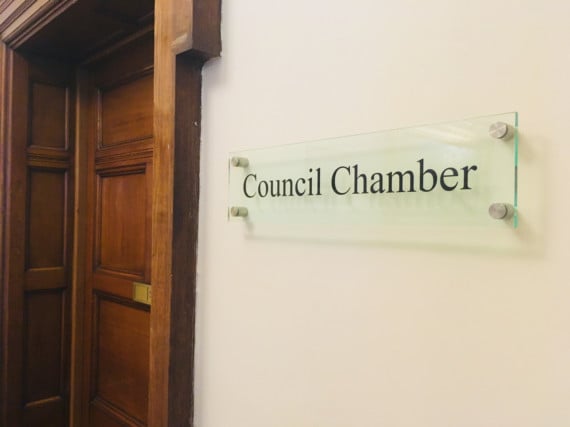
Douglas Council has changed its decision-making structure ahead of the 2020 local authority elections.
There will be fewer seats up for grabs during the April contest - the number of councillors is being cut from 18 to 12, with three representing each of the four new wards.
There’s concern among current members this will lead to an increased workload and greater time commitments for those who are elected.
As a result, changes have been made to the council’s five committees: executive, environmental services, pensions, regeneration and community, and housing.

The latter will now come back under the executive committee’s ’umbrella’ and report on policy and budgetary matters rather than operate independently.
With this added scrutiny, the need for an independent member to sit on the housing committee has also been deemed unnecessary.
Other changes to the authority’s constitution are also expected to come forward ahead of next year’s elections.
Council leader David Christian explained that after April 2020, councillors would be expected to attend an average of 30 scheduled meetings.
However, this figure was disputed by Councillor Stephen Pitts, who suggested the figure would be closer to 36 meetings a year for members following the change in numbers.
A leaflet is also being prepared for prospective candidates to let them know what to expect from the role at the request of Mr Pitts.
Unlike other authorities, which usually meet in the evenings, Douglas Council meetings are held in the afternoon.
Mr Christian said: ’We have had members in the past who have been elected and then realised when the meetings are so they left, so we can look at a basic candidate leaflet that outlines what is expected and when meetings are.
’I know when I started, I was chased at the end of the year because I hadn’t submitted expenses for meetings I’d attended. I didn’t even know there was an attendance allowance.
’But people have to know, we’re not the same as other local authorities meeting in a hall in the evening with a part time clerk.’
Mr Christian claimed £5,425 during the last financial year. Ratepayers paid more than £40,000 for members’ expenses in the capital alone - a figure which should drop by a third when the council’s membership is decreased.
Douglas councillors and commissioners elsewhere, don’t receive a salary.
But they can claim £7.50 an hour for an evening meeting, and £12.50 for a daytime session. Many smaller, more rural boards pay nothing.
Legally, the maximum annual claim that local authority members can claim is £3,600 for attendance at evening meetings or £6,000 for attendance at daytime sessions or at both daytime and evening meetings.
Comments
This article has no comments yet. Be the first to leave a comment.