
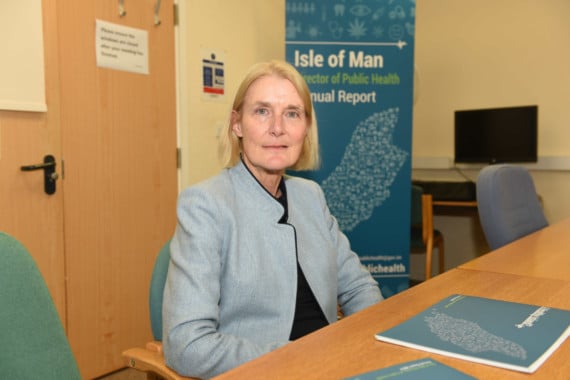
Government has a history of writing reports that go absolutely nowhere.
That was the frank view of director of public health Dr Henrietta Ewart as she gave evidence to the Tynwald committee investigating the island’s suicide rate.
Appearing before the social affairs policy review committee, alongside Health and Social Care Minister David Ashford, Dr Ewart said a suicide prevention strategy had to be properly resourced.
She said: ’There is a big history on this island, and we are not unique, of writing very nice documents that have perfectly reasonable objectives in them but absolutely nothing happens as a result. Resources have to be committed.’
 New organ donation law to come into force as island urged to ‘make informed choice’
 Department outlines new education priorities as Tynwald receives updated plan
.jpeg?width=209&height=140&crop=209:145,smart&quality=75) Tynwald rejects referendum on Isle of Man's Net Zero policy
Tynwald rejects referendum on Isle of Man's Net Zero policy Operating the Isle of Man’s Liverpool ferry terminal costs more than £710,000 a year
Mr Ashford agreed. ’It needs to be cross-government and across agencies,’ he said.
’Suicide prevention is absolutely essential. We’ve come a long way with mental health services compared to where they’ve been even in the last few years. There is still a lot of work to be done but we can get there I think.’
analysis
Dr Ewart said that analysis of data over the last three years showed that on average the island’s suicide rate had remained steady and was in line with that in England.
The public health director said while there were spikes and troughs reflective of the island’s small population no clusters had been in seen in the data.
She said the numbers have fallen a bit since the late 1990s and that the methods have changed, with a falling in poisonings. This she attributed to restrictions on the sale of paracetemol.
Asked about the impact of social media, Dr Ewart said this was a ’two-edged sword’.
On the one hand trolling and cyber bullying could be a risk factor, she said, but on the other hand it could be ’protective’ by giving people access to a ’whole host of anonymous advice about mental distress’.
She said she was ’horrified’ when she took her job to find there had been no rolling analysis of suicide statistics.
And she could not understand why previously the director of public health was not the lead on the government suicide prevention strategy.
Asked by committee member Martyn Perkins MHK on her views about how the media reports Coroner inquests, Dr Ewart said it wasn’t an issue that was ’waving a red flag’.
She said: ’There are very good guidelines around this.
’The Samaritans have done an awful lot of work in that area and have a publication of guidelines for good practice for media reporting. I’m not sure whether that has been formally done here and I think when we move on with the strategy we will be testing that.
’But certainly the reporting that I have seen when cases have happened actually seem to be within those guidelines already so it’s not waving a red flag.’
Committee chairman David Cretney MLC claimed that wasn’t always the case and he had ’got himself in big trouble with the press a long time ago’ when he felt the extent of reporting of inquest hearings was ’more than necessary’.
â?¢ The Independent Press Standards Organisation has guidelines for covering inquests where a suicide verdict is recorded by the Coroner.
IPSO’s code, which Isle of Man Newspapers follows, states that journalists are allowed to report anything which is said or given as evidence at an inquest, they must not include ’excessive detail’ about how someone has died.
Comments
This article has no comments yet. Be the first to leave a comment.