
Outside investment could be the way to secure the future of the island’s heritage railways, Infrastructure Minister Ray Harmer reveals to PAUL SPELLER in the latest of his in-depth interviews with the island’s 24 MHKs. Mr Harmer also shows his confidence that a final scheme for Douglas promenades will materialise and that the silo mentality of previous governments is on its way out.
-------------------------------
After just a few short months in his new job, Instructure Minister Ray Harmer knows he has big decisions to make to keep things on track.
His department covers everything from air and sea services, to public transport and potholes. Appointed to the cabinet after just a year as an MHK, it’s a big job to be given.

.png?width=209&height=140&crop=209:145,smart&quality=75)

.jpeg?width=209&height=140&crop=209:145,smart&quality=75)
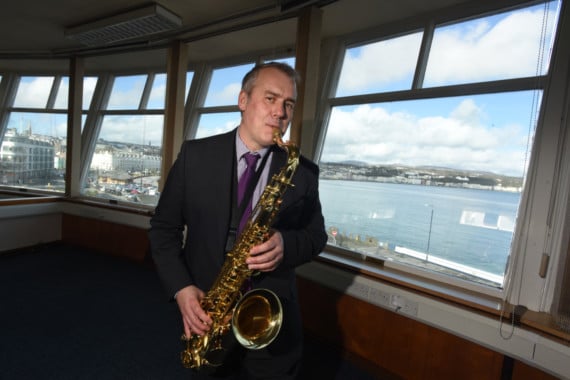
The marathon-running, music-loving Minister meets me at the Department of Infrastructure offices in the Sea Terminal, just below what was once the Crow’s Nest restaurant. With the sprawling crescent of Douglas seafront as a backdrop, they are rooms with a better view than most.
That same panorama also provides a reminder of the more troublesome tasks facing the department. Short-term resurfacing work has just started on the southern end of the prom, but the bigger deal is yet to come.
Can Mr Harmer and his department come up with a scheme for the entire promenade that keeps everyone happy? Twin horse tram tracks, single tracks, no tracks; parking to the left, to the right or somewhere in between; reduced walkway or not?
The balancing act of keeping all interested parties happy will be a difficult one, as predecessor Phil Gawne found.
But Mr Harmer is hopeful.
’We will come up with the next conceptual ideas and say: "Have we got the balance right?"
’There is always going to be some give and take. It is going to be a key piece of infrastructure and there are going to be so many different uses.
’We have the main principles, the next stage in terms of the promenade is how it will look and we will take it to Tynwald a bit later this year. Once we have got that, we will be able to do the detailed designs.’
He is conscious of the potential costs of the latest return to the drawing board.
’We are going to use our own staff. We have some very skilled people.’ He says the work will be high level from the conceptual stage through to the planning application.
The debate over the horse trams has trotted on long enough, but there does seem to be more of a spirt of co-operation between both sides these days; a preparedness to accept change. Mr Harmer hopes that others with interests elsewhere may observe the willingness to compromise from the Friends of Douglas Bay Horse Tramway and realise that is where the future lies.
He regards the whole heritage railway system as an important component in the engine of Manx identity, but change may be required.
’It is about retaining our heritage and what makes us "us", in a sense. It is a case of understanding what the cost is, explaining it to the people and taking it to the next level.
’At the moment, we have a temporary situation (on the horse trams).’
’We have the stables on lease, but, with all our heritage rail, it is about the capital, it is about maintenance.’
He says the maintenance of the railway infrastructure is the main capital cost, which he anticipates will remain with the government. But who runs the service and meets the operating costs is another matter.
’We may be able to give the running to a third party,’ he says.
’We have to make some very tough decisions on how we do that. Obviously, in an ideal world you have somebody to invest.’
He confirms the idea of seeking outside investment would be for all the railways, not just the horse trams.
’Everything is on the table and that is going to be something we will need to look at.
’The danger is if there is not that ability to work together we end up, potentially, with everything that is the worst of every world.
’Sometimes it is not possible to keep everything exactly the same. It is the same with the operational side of how [the railways] run.’
Mr Harper comes across as someone who is happy to listen, but not necessarily swayed by flimsy argument.
There is much more to the DoI than the promenade and railways, of course. Among the things we discuss are Mr Harmer’s belief in the open skies policy for air services and his commitment to the ’right process’ being employed when a new linkspan user agreement for sea services is negotiated.
The pledge that the government departments’ silo mentality of the previous administration will be ditched has been made so often, now, that it is bordering on cliché, but Mr Harmer is confident it will happen.
’It is a completely different set up. We have every opportunity to do that. The Programme for Government is a massive step forward.’
He wants the work of his department to be more targeted and that includes works programmes that are more preventive than reactive. In other words, plan ahead. Don’t wait for the road to collapse to instigate the repairs.
Mr Harmer, 49, has one major advantage: his background. The Peel and Glenfaba MHK is an engineering graduate from Cambridge University and has worked as a consulting engineer.
In the past, there has been the feeling some Ministers become bedazzled by the recommendations of consultants wowing them with their expertise. We are well within our rights to expect better from Mr Harmer.
’I understand the pressures, the demands people put on. I understand the fact it is about priorities, but I do also understand the massive effort that goes in, for instance, with dealing with Storm Doris.’
Mr Harmer is aware of the hard work that awaits his department. There appears to be a realisation that, sometimes, pragmatism must come ahead of politics. One of his tougher tasks may be in ensuring others realise it too.
’You have just got to take one step at a time and realise you cannot do everything. I have always enjoyed a challenge.’
It is not going to be an overnight job, but as a Parish Walker, who has run marathons, Mr Harmer should be well used to dealing with the long haul.
He hopes to compete in more marathons in the future and says that running is a useful outlet for dealing with pressure.
’Sometimes you get a problem that seems unsolvable and, by the you have finished, it clears your head.’
He is also member of the Manx Saxophone Ensemble and enjoys playing either in front of an audience or just for his own benefit, away from the public glare.
The advantage of playing a musical instrument without an audience is that, unlike politics, no one notices if you strike a duff note.
’You can just blast away and let rip!’
His approach to the day job is a little more measured.
Comments
This article has no comments yet. Be the first to leave a comment.