
Figures given by an MHK comparing the number of civil servants in the Isle of Man with those in the UK were misleading.
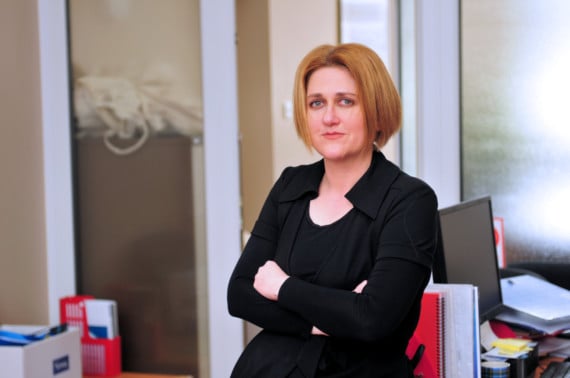
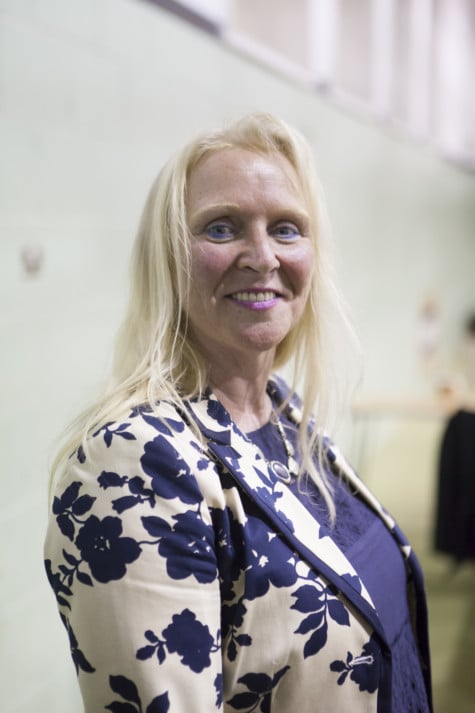
Union leader Angela Moffatt has hit out after Onchan MHK Julie Edge highlighted what she suggested was an overstaffed civil service.
The principal differences are how ’civil servants’ are defined in each jurisdiction.
Mrs Edge told Tynwald that the UK had one civil servant for every 116 residents but here in the island, with 2,500 civil servants for a population of 83,341, the ratio is one for every 33.
.jpeg?width=209&height=140&crop=209:145,smart&quality=75)

.jpeg?width=209&height=140&crop=209:145,smart&quality=75)
.jpg?width=209&height=140&crop=209:145,smart&quality=75)
The court agreed to carry out audits into her claims.
Prospect negotiations officer Angela Moffatt said that in the Isle of Man many civil servants carried out roles not undertaken by civil servants in the UK.
She said they included prison officers, social workers, engineers, scientists.
’We have large numbers of people under the civil service who might be employed via public agencies, quangos or other bodies in the UK
’For example, hospital admin and secretarial staff would fall under trusts in the UK.’
She added that in the past, non manual worker roles, or roles which don’t easily fit under categories - for example teaching or health professionals - broadly end up employed as civil service or by analogy to the civil service - so there is an inflated number.
Ms Moffatt said: ’The traditional idea of an army of "bureaucrats" hidden away in offices is just not the case on island.
’We have large numbers of customer facing/frontline employees, who are categorised as "civil service" simply because they don’t easily fall under any other category and are employed by central government departments.
’When you have the level of public services we have on the island (for a low rate of tax), what do people think is going to happen? That you pay low tax compared to the UK, get a higher level of public services AND employ virtually no-one to run them?
’I’m often accused of being in la-la-land - but there are people expressing opinions like that who need to have their bubble popped.
’Have a trip to the UK, or better still live there permanently, pay more tax and get fewer public services if you prefer.
’The first time you pay your new prescription charges will be a good reality check (UK £8.60, Isle of Man £3.85). And if you think complaining will work - good luck accessing a Government department and the "hold" facility on the phone line to speak to a "civil servant" about it!’
Mrs Edge suggested that 60 per cent of grading requests were granted.
Ms Moffatt said that was misleading too.
’Many are filtered out before they get to a formal evaluation process, so this leaves a pool of requests which are more likely to be stronger claims.
’Secondly, people generally only ask for a review of their grade if they think it’s higher, and can evidence that!
’Lastly, there have been broad reviews in certain areas where it was felt grades might be "wrong" or structures needed to be reviewed.
’Generally, this conforms to the pattern you’d expect - most roles are the "right" grade, a few are over-graded and a few are under-graded.
’We know this because as a union we go in and deal with the fallout. The benefit of organisational reviews though is you get a much more holistic idea of what staffing numbers should be, based on what needs to be delivered - not just the narrow lens of "grade".
She added there was a perception that there are too many high level posts being paid too much.
Some of the highest grade posts in the Manx civil service are classed as ’senior’, are in very distinct and high-paying professions, for example, law and accountancy. They are paid the market rate.
’You can review every post in government, but the question of how an organisation is structured, and the staff needed to deliver services is not going to be resolved by reviewing the grade,’ said Ms Moffatt.
’You have to have a broad review which looks at staffing levels - a grade review of individual posts won’t achieve that.’
Ms Moffatt said a big issue was cost.
Grading 1,200-plus posts in the public sector, as suggested in Mrs Edge’s motion, would be ’phenomenally expensive’.
’I cannot see such a process being undertaken for much under £500,000,’ she said. ’I’d expect it to be much higher by the end of the process.
’Ultimately it won’t address the core issue of whether there are too many senior level posts.
’Even if it does identify some posts which are over graded - it will inevitably identify some posts which are under-graded - because in a process of this size you’d expect that outcome.
’So what will we spend and what will we save - and ultimately what will we achieve? Does anyone have a clear idea of what it is supposed to achieve anyway?’
’We were due to look at all Public Services Commission grades, in tandem with the review of ex-Whitley Council posts which is under way at present - so frustratingly this was going to happen in a much more coherent way anyway and taking into account the potential impact of the Equality Act once it comes into law.
’But now Tynwald have decided that another process is needed. Why?’
Comments
This article has no comments yet. Be the first to leave a comment.