
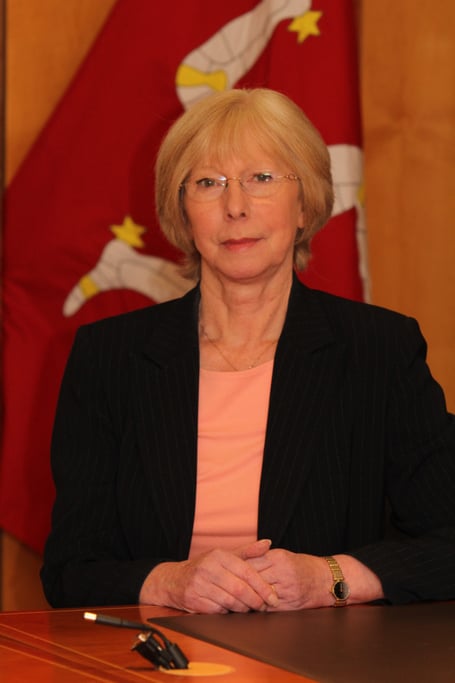
The government is drawing up a new oral health strategy to replace the ’woolly’ plan that was in place.
Kate Beecroft, the health minister, was scathing of the previous strategy.
She told Tynwald: ’We are not satisfied with the way the previous strategy was constructed, because it was, to put it bluntly, a bit woolly.
’There is nothing that you could hang your hat on and say, "Yes, we have got to do this, we have got to target that."
 New organ donation law to come into force as island urged to ‘make informed choice’
 Department outlines new education priorities as Tynwald receives updated plan
.jpeg?width=209&height=140&crop=209:145,smart&quality=75) Tynwald rejects referendum on Isle of Man's Net Zero policy
Tynwald rejects referendum on Isle of Man's Net Zero policy Operating the Isle of Man’s Liverpool ferry terminal costs more than £710,000 a year
’The improvements that have been made have been made by staff actually just taking and driving the matters forward themselves - and they are to be congratulated for that.’
She added: ’There are plans for 2017 onwards to increase access to NHS dental services across the island, following the elimination of the dental waiting list in September 2016, which facilitated all patients waiting to be allocated to an NHS dentist.
’Capacity increases are currently being investigated.’
Mrs Beecroft, who was appointed health minister last year, was responding to questions from David Ashford (Douglas North), who wanted to know which of the 10 priorities of the previous oral health strategy had been implemented.
She said the strategy was in place from 2011-2016, but a new strategy, to run up until 2022 was being drawn up.
’The 10 priorities for action were described in the strategy as areas we would like to concentrate on for the next five years,’ she said.
’As such, they were not framed as specific, measurable, achievable, relevant, timed and funded objectives.
’The breadth of the priority areas, and the fact that there were no clear objectives set for each area, means that we cannot give a simple statement of how many of the 10 priorities have been achieved.’
But, she said, there had been progress in a number of areas.
’These include health promotion activities with young children under five,’ she said
’Members of the community dental service regularly visit nurseries, primary schools and community groups to deliver age-appropriate oral health lessons to children.
’The community dental service works closely with health visitors, to ensure that carers of children under five are given timely and appropriate advice about oral health.’
Studies showed that 27.6 per cent of children had examples of tooth decay, which she said was an improvement on levels in 2011, but still not good enough.
The new strategy, she said, would have proper targets and a plan of how they were to be achieved.
Comments
This article has no comments yet. Be the first to leave a comment.