
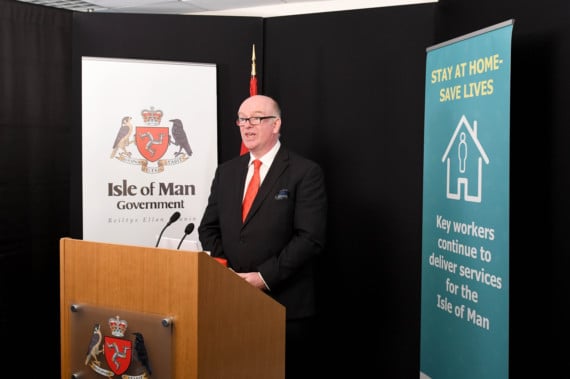
Medical advice supplied to the government that led to Manx residents being excluded from coming home will not be released at this time.
A Freedom of Information request asked for the publication of the medical advice that guided the controversial decision has been refused, despite an acceptance of a ’significant public interest’.
The request, submitted by an unknown resident, said: ’In Tynwald yesterday (March 30) the Chief Minster justified the exclusion of Manx Residents from returning to the IoM on the basis of medical advice.
’Given the seriousness and potential consequences of this measure, I would wish to see what medical advice guided the decision to exclude returning Manx residents.’
 New organ donation law to come into force as island urged to ‘make informed choice’
 Department outlines new education priorities as Tynwald receives updated plan
.jpeg?width=209&height=140&crop=209:145,smart&quality=75) Tynwald rejects referendum on Isle of Man's Net Zero policy
Tynwald rejects referendum on Isle of Man's Net Zero policy Operating the Isle of Man’s Liverpool ferry terminal costs more than £710,000 a year
However, this was rejected using Section 34 of the FoI Act which allows for exemptions when the information requested relates to the formulation or development of government policy.
The response said: ’Although some of the policy formulation has been concluded in the completion of certain emergency regulations made pursuant to the Emergency Powers Act 1936, it is considered that this request is timed at a stage where relevant development of policy is still being formed and developed.
’This policy formulation continues during the response to Covid-19 and weighs in favour of withholding of the information at this time.
’We will continue to review the policy formulation, and if the qualified exemption under s34 no longer applies the information can be provided.
’Release at the appropriate point in time will enable individual policy decisions, such as this, to be understood in the wider context of the overall policy response, rather than viewed in isolation, and their collective contribution to achieving the fundamental strategic objectives which underpin all policy decisions made in response to Covid-19 emergency to be better understood.’
The response accepted that there was ’significant public interest in allowing public scrutiny of the details of the policy while the policy is still in the public consciousness’.
But it said that doing so was ’protecting ministerial discussions and collective decision making processes’.
Other reasons for refusal included ’a chilling effect on free and frank ministerial debate in future’, ’public exposure of the information may compromise candid and robust discussions about policy, the exploration of extreme options, the keeping of detailed records and the taking of hard choices’.
Comments
This article has no comments yet. Be the first to leave a comment.