

Under the proposals, politicians will get a bigger basic salary but their £7,607 tax-free lump sum for expenses will be scrapped - and there will be no 30% uplift for department members.
The report by an independent panel, which was published in January, recommends a series of reforms that will come at no extra cost to the taxpayer.
Members’ pay costs £2.3m a year, at 2019 rates assuming all political roles are filled.
 New organ donation law to come into force as island urged to ‘make informed choice’
 Department outlines new education priorities as Tynwald receives updated plan
.jpeg?width=209&height=140&crop=209:145,smart&quality=75) Tynwald rejects referendum on Isle of Man's Net Zero policy
Tynwald rejects referendum on Isle of Man's Net Zero policy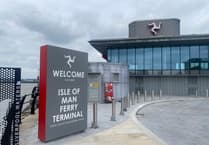 Operating the Isle of Man’s Liverpool ferry terminal costs more than £710,000 a year
Tynwald members’ basic pay currently stands at £44,675 with a 30% uplift for department member, 50% for Minister and 80% for Chief Minister.
Under the proposals, the basic salary for an MHK would be based on the mid-point between spine points 40 and 41 on the civil service payscale.
At 2019 rates this would work out at £65,098.
MLCs would have their basic salary set at spine point 39, which would stand at £61,455 in 2019.
At 2019 rates, a Tynwald member who is a member of a department, would have pocketed £63,926 including their 30% uplift and lump sum for expenses.
Under the panel’s proposals the uplifts would be limited to an extra 30% for the Chief Minister, 15% for a Minister or Speaker and 5% for the chairman of the statutory boards.
This effectively means that will be no financial penalty for members who choose not to serve on departments, and instead focus on a scrutiny role.
The independent review panel was chaired by Ian Cochrane, sitting alongside Jennifer Houghton and form chief minister Sir Mile Walker.
Their report notes: ’The current system is overly complicated. We are certain that it can be improved.’
Proposing the MLCs are paid less than MHKs, the independent panel said: ’We cannot accept that members of one branch are necessarily harder-working than members of the other.
’What we do accept, though, is that MHKs are expected by their constituents to be "on call" seven days a week.’
The panel said they were not clear why some executive roles are remunerated and others are not.
They said some Tynwald members had made the case for a rebalancing of uplifts to give greater weight to scrutiny roles.
Other argued scrutiny roles are less onerous than departmental work.
And one or two members expressed concern the proposed reduction in the number of uplifts might make it harder to recruit members to departments.
The panel said the fixed annual sum for expenses is no longer appropriate or acceptable to the public.
Speaker Juan Watterson, chairman of Tynwald’s standing committee on emoluments, said: ’’This debate is an opportunity for Tynwald to introduce much-needed reforms which have eluded us for nearly a quarter of a century.’
Comments
This article has no comments yet. Be the first to leave a comment.