
Isle of Man Football Association has conducted a survey into racism in the Manx game, and among the findings are that more than half of ethnic minority respondents have experienced it.
There were 247 responses to the survey (5.3% of all IoM players, alongside coaches, referees and others) which sought to find out:
l Is racism a problem in Manx football?
l Do people find Isle of Man football a welcoming place, regardless of ethnicity?
.jpeg?width=209&height=140&crop=209:145,smart&quality=75)

.jpeg?width=209&height=140&crop=209:145,smart&quality=75)

lWhat could the IoMFA be doing to improve this?
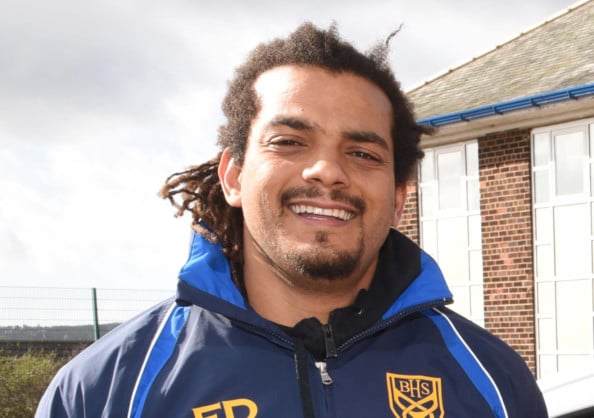
The report was prompted and assisted by local footballer Furo Davies after he spoke out about his personal experiences of racism in Manx football earlier this year.
Seven percent of the survey respondents identified as ethnic minority, which the FA says is ’roughly consistent’ with the island’s population.
Overall, 29% of respondents had personally seen or experienced racism in Manx football, with this being the case for 55% of ethnic minority respondents.
However, 92% of respondents (and 90% of ethnic minorities) still think that Manx football is a welcoming environment.
The association described this statistic as a positive result, with it being ’particularly pleasing that this figure was 100% for [responses from] junior players and parents/carers, which is encouraging for the future’.
The Examiner asked FC Isle of Man attacker Mr Davies what he thought about the outcome of the report, particularly the figure which showed over half of ethnic minorities had experienced racism.
’I’d say a few years ago, when I was a lot younger, then yes I’d see racism a lot more, a bit more overtly as well - but not in the last five years or so, the overt stuff, but I’d say there are things that are said which are borderline, under the guise of "banter" which don’t get brought up,’ Mr Davies said.
Among other key findings were that most respondents (74%) are not sure how to report a racism incident, including 59% of referees.
In addition to this, only 57% are confident that the IoMFA would deal with a report of racism effectively.
Mr Davies said he had expected this, based on players who had still been asking him what they should do about reporting incidents of racism.
’But now, having worked with them [the FA], I feel like I’d be comfortable taking a report [of racism] to them - but that doesn’t mean that younger kids, who don’t know people within the FA would be confident, so it needs to make itself more accessible,’ he said.
’And make younger people understand that they’re on their side, regardless of the outcome - that they’ll listen, without any prejudice.
He continued: ’One of the next steps is to equip some of the safeguarding officers with the tools to make themselves welcoming, to spot racial abuse, and to be there for somebody who wants to make a report.
’Because it’s not an easy thing to discuss, with somebody that might not understand.’
Overall, 94% of respondents rated the importance of diversity and inclusion as either ’quite important’ or ’very important’.
Mr Davies also stressed that he did not want to come across like he was criticising Manx football, because it had overall been welcoming to him.
The IoMFA report on the survey said that accounts of past racism ’varied a lot in nature from the worst kind of racist verbal abuse to more subtle, inappropriate comments from spectators, opposition and even team-mates’, and these included recent experiences.
The association continued: ’Some players and referees felt race had been used to influence refereeing decisions.
’There were several comments made implying that lack of footballing success or progression was due to ethnicity.
banter
’Several comments referred to "banter": some suggested that a bit of banter is okay; others said that excusing racist comments as banter is unacceptable.
’In addition, there were a few comments alluding to sexist and homophobic behaviour from spectators and players’.
The IoMFA said that while this report had been specifically intended to address the issue of ethnic diversity, ’other areas of equality and inclusion are important and are being addressed as part of the FA’s Equality Standard’.
The IoMFA said that though there were not concrete plans to conduct report into other types of discrimination (i.e. homophobia), that this had been discussed and was ’definitely on the agenda’.
It also highlighted that ’as racial diversity is not an area that the board had a lot of expertise in’, the IoMFA said that it sought help from several professionals from England FA and Kick It Out (a UK anti-racism football organisation).