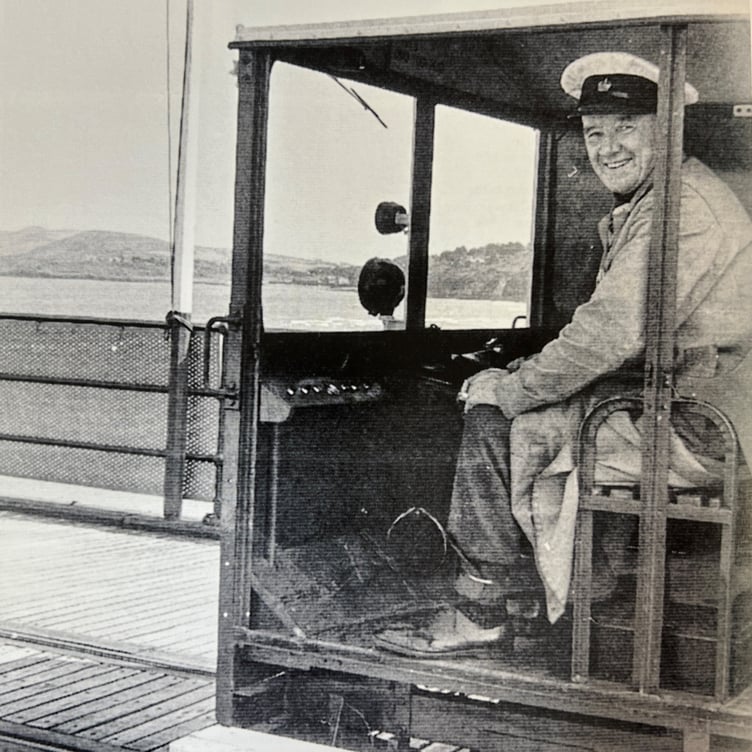
It’s been a remarkable survival, defying numerous attempts to cut short its time as a masterpiece of Victorian engineering.
Queen’s Pier was being labelled a ‘white elephant’ as early as 1901 and calls for its demolition came many times over the following decades.
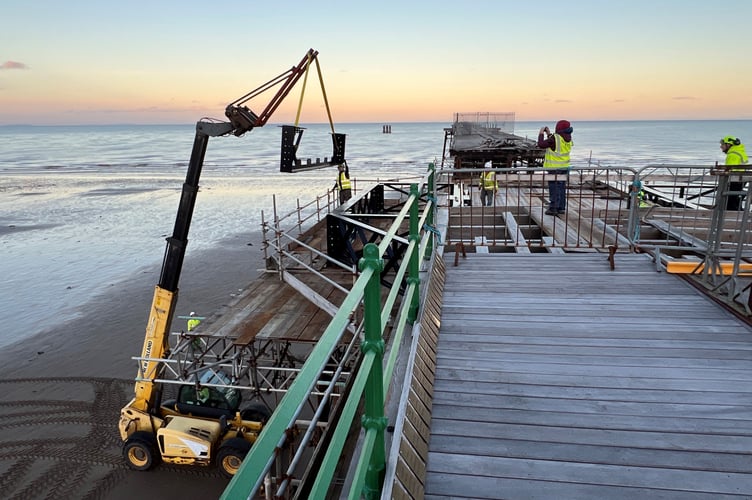
But it is now once again the pride of Ramsey thanks to the remarkable efforts of volunteers who are restoring the iron lady bay by bay.
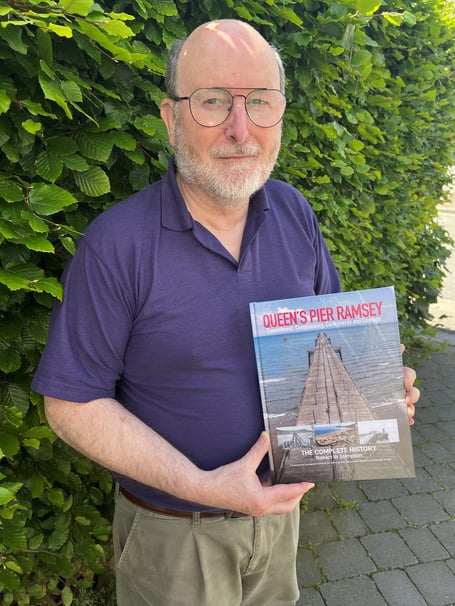
The story of the sixth longest pier in the British Isles is set out in extraordinary detail in a new book by Robert Stimpson which is on sale from today (Monday).


-outside-the-Dainty-Dive-in-Douglas-(1970)-with-fellow-Douglas-School-of-Art-stu.png?width=209&height=140&crop=209:145,smart&quality=75)
In a foreword, Lieutenant Governor Sir John Lorimer describes it as ‘one of the greatest historical assets in the Isle of Man’.
It’s been a labour of love for former Manx Utilities project sponsor Robert who has trawled the archives to provide a fascinating insight into the landmark’s challenging inception, the political rows over its continued maintenance and the skilled efforts of the Queen’s Pier Restoration Trust volunteers.
The text is accompanied by an impressive collection of photographs, many never seen before.
An estimated 10,000 visitors witnessed the opening of the pier in July 1886.
But even before it was built, it had provoked controversy. Constantly increasing costs of maintenance only fuelled the criticism.
Robert notes in his introduction that calls to ‘scrap it’, ‘blow it up’ and ‘burn it down’ have been made by members of Tynwald at various times over the past 140 years.
In 1938, one letter writer to the Ramsey Courier suggested that the ‘bay beauty destroying’ pier be scrapped and the iron sold to Germany which was actively buying scrap metal for armaments.
Two key Tynwald debates were to prove pivotal for the pier’s survival.
In May 2009, members overwhelmingly supported a scheme to make the pier safe but keep it closed, after rejecting an amendment calling for its demolition.
Just two years later, Tynwald opted by the narrowest margins - a single vote - to spend up to £1.758m on essential stabilisation works.
That vote took place immediately after the tea break while the island’s media and members of the public were locked out of the building, and three MHKs, including the Chief Minister, had not returned to the chamber.
By 2013, retired engineer Tom Durrant was working behind the scenes to lobby for a charitable trust to lead a community-funded restoration project.
The big day came in July 2017 when Mr Durrant and Captain Stuart McKenzie signed a five-year lease with the DoI to restore the first three bays.
From that moment, the project has gone from strength to strength.
Volunteers are currently working on bays 9 and 10 and the pier has become a hub of community celebrations and events.
It now seem unthinkable that anyone could have ever contemplated demolition.
In an afterword, Robert calls for the Manx government as pier owners to agree a long-term plan for the landmark’s continued upkeep.
In a nice touch, his book lists the inscriptions on every one of the sponsor’s plaques, which has been one of the trust’s biggest fund-raisers.
‘Queen’s Pier Ramsey - Commitment, Complacency, Controversy and Courage’, is published by Lily Publications price £30.
The whole purchase price, when bought directly from the QPRT, will go towards the continuing restoration of the landmark.