
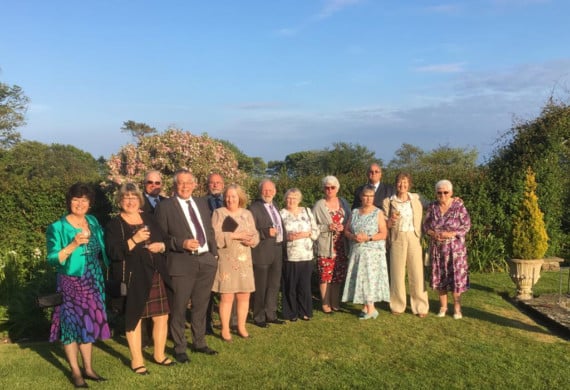
Let us take you back to 1959. Queen Elizabeth II, just 33 years old, has been on the throne for seven years. Bobby Darin is topping the charts and Elvis Presley is doing his National Service.
A house would set you back around £2,272 and a car £780.
The average annual wage is £569 and, if you were diagnosed with cancer, it was almost a death sentence.
’You have to understand that when the Isle of Man Anti-Cancer Association was set up there was virtually no treatment for cancer: the surgeon might be able to remove a bit, but it was all research then,’ explains Malcolm Clague.
.jpeg?width=209&height=140&crop=209:145,smart&quality=75)
Radiotherapy was also available though not being delivered with the precision and accuracy it is today.
Manx residents who required radiotherapy were treated at the ’Liverpool Radium Institute’.
This had been supported by eight island district branches of the ’Friends of the Liverpool Radium Institute’, which had established an endowment fund at the facility.
When Clatterbridge Hospital opened early in 1959 treatment was moved to the new facility.
The Radium Institute refused to transfer the funds that had been raised in the island so all the branches resigned and re-formed overnight as the Isle of Man Anti-Cancer Association
The Association also broadened its remit from supporting patients who required radiotherapy to raising funds for cancer research and to facilitate the introduction of new treatments.
Over the past 60 years the charity has raised more than £22 million.
Malcolm, himself a former surgeon, joined the charity 10 years ago to provide medical input to help evaluate how the funds raised should be spent most effectively.
He and the charity’s executive officer, Sandy Denning, herself a cancer survivor, will go on several fact-finding trips to the UK each year to look at potential projects and facilities which could help cancer patients in the island.
Malcolm says: ’It’s important to do research.
’If you ask anyone who’s affected by cancer, whether it’s a patient who’s got cancer or a close relative of that patient, what they would wish for best, it would be a cure for the disease.
’Unlike the UK government, the Isle of Man government doesn’t put any money into research so it’s important that we should give our share as we’re as likely as anyone to get cancer.
’But I make sure that the money goes into areas that are appropriate.
’Sandy and I will go off for a day and look at these places that are asking us to send them money.’
The Association part-funded a project by Professor Marais which, in 2012, led to the discovery of a new drug treatment for malignant melanoma (an aggressive form of skin cancer). This drug has improved survival rates from around 10% to 50%, a significant step forward.
Currently one of their biggest projects is supporting the new Clatterbridge Cancer Centre which is being built adjacent to the new Royal Liverpool Hospital.
As has been well documented, construction of the Royal Liverpool stalled when construction giant Carillion went under. The new Clatterbridge Centre is being built by a different firm (who have since also taken over the Royal Liverpool site) and it is on track to be handed over on Valentine’s Day, 2020 and opened late next summer.
This will mean that it will probably be open around 18 months before the Royal Liverpool: as the two buildings are planning to share kitchen and other service facilities this will mean there will be a few issues to sort out but it will be, as Malcolm says: ’a beautiful facility, state of the art’.
And it will be used by many cancer sufferers from the island as he goes on to explain:
’There are around 350 new diagnoses a year and, of that number, probably 200 or more go off the island for their treatment, or at least part of their treatment, at the appropriate centres of excellence in the north west of England.
’So we’ve given £400,000 to the new Clatterbridge Cancer Centre to fund three relatives’ rooms for relatives of very sick or dying patients because the Isle of Man is probably going to have more need for them and we’ve also funded a novel treatment for prostate cancer which delivers more focused radiotherapy, so our money’s being earmarked for those.’
The Isle of Man Anti-Cancer Association is unusual in the way it chooses to spend the money it’s raised.
Every year at its AGM the members (a broad term for those who have helped or been involved with the charity) will decide how all the money raised the previous year will be spent.
This means they are not fundraising for a specific item or project but spending money they have already raised.
In the island they have contributed money towards providing the services of a consultant and a nurse for an acute oncology service.
This will support patients who are undergoing chemotherapy and present at A&E with acute symptoms when their own consultant is not available.
Malcolm himself holds awareness sessions around the island to help people become more knowledgeable about the symptoms for cervical, prostate and skin cancer that should be checked and are more likely to go to their doctor in a timely manner.
He says: ’The UK is 1-2% behind other countries in cancer survival and it’s because the UK doesn’t put money into cancer awareness.’
When you look back at the progress made so far in helping treat people with cancer it’s plain that charities like the Isle of Man Anti-Cancer Association have made a huge contribution.
It’s a charity that people of the island can feel very proud of having supported.
Comments
This article has no comments yet. Be the first to leave a comment.