
No fewer than 1,352 incidents and near misses have been reported on the heritage railways since October 2011, a Freedom of Information request has revealed.
But the public transport director says statistics can paint a misleading picture if taken out of context.
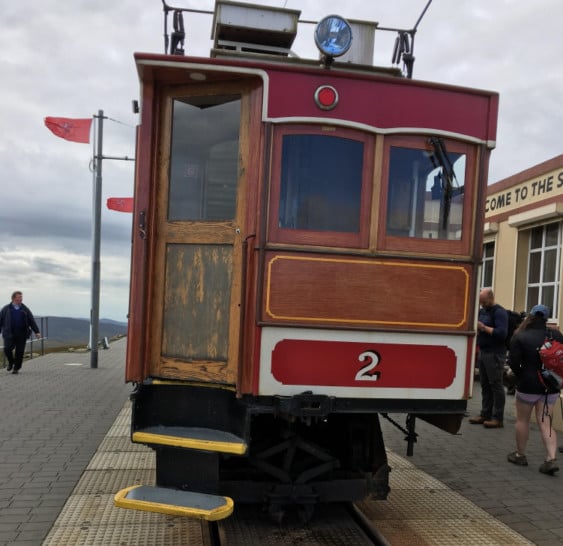
The Manx Electric Railway Society lodged an FoI request on safety-related incidents after the recent runaway tram drama on the Snaefell Mountain Railway.
Passengers said they were terrified when the vintage tram lost power, braking and control shortly after leaving the summit.
.jpeg?width=209&height=140&crop=209:145,smart&quality=75)



It was brought to a halt using the manual fell brake but only after it had careered across the road at Bungalow.
The Department of Infrastructure’s response shows that between October 2011 and the end of June this year there were 1,352 incidents, near misses and hazard reports.
During that period, 37 members of the public were injured on the railways or their premises - 14 on the MER, eight on the SMR and 15 on the Steam Railway.
And 87 staff were injured - 50 on the MER, nine on the SMR and 28 on the Steam Railway.
There were 148 road traffic/crossing related incidents on the MER and 64 on the SMR, while there were 276 barrier related incidents on the Steam Railway.
There were 16 derailments on the MER, eight on the SMR and six on the Steam Railway.
There were 236 issues with the overhead equipment on the MER and 18 on the SMR.
Director of public transport Ian Longworth said: ’The department has a reporting system for the railways so we get a record of incidents and near misses.
’This is intended to highlight where we need to consider items such as operating procedures needing a review before there is a larger problem.
’An example is level crossing renewals where we note failures in order to have priorities for investment for renewals.
’Many of these were unreliable and we have renewed two or three a year which has almost totally removed this issue from the list.’
He said: ’It is an entirely normal way to operate a railway and the bare statistics can paint a misleading picture if taken out of context.’
Mr Longworth pointed out that a low level of reports would suggest a lack of safety awareness among staff.
The DoI sees its highest levels of near-miss reports in its ports and transports functions and near-miss reporting is part of the culture in these operations, he said.
He added: ’The department is actively encouraging more reporting in other areas as each report is a free warning of an issue that can now be fixed before someone is hurt.
’Of course, many are not things that would ever result in injury, but they all help us learn.’
Comments
This article has no comments yet. Be the first to leave a comment.