
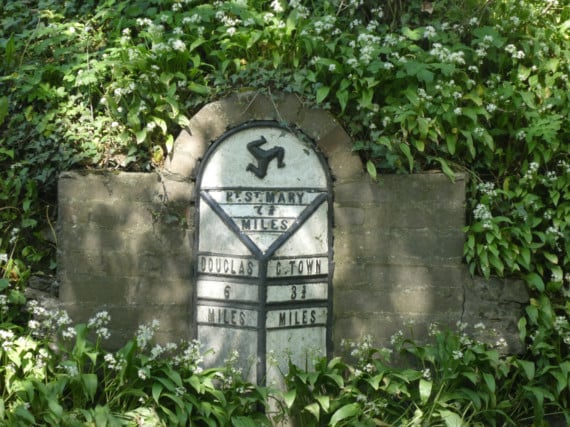
Stop cutting our hedgerows and sod verges!
That’s the resounding message from critics of the recent severe cutting back of roadside verges in preparation for the TT.
Of particular concern is the destruction of wild garlic at the Fairy Bridge on the New Castletown Road at Santon.
’I am so angry about the carnage that the DoI is causing to hedges and roadside verges,’ said resident Sarah Marsden.
.jpeg?width=209&height=140&crop=209:145,smart&quality=75)


’It’s breeding season for birds and other creatures. Our wildlife is suffering, and needs all the help it can get. I thought being a "Biosphere" meant that all care would be given to help our wildlife.
’It’s against the law - or it should be - to cut hedges and verges until after the summer. Fairy Bridge is a disgrace... who in their right mind thinks they have made a good job there? It beggars belief.’
The government said the work was being done for ’road safety’ reasons and hedge trimming was ’always kept to the minimum’.
But Ms Marsden said: ’I can only assume the person who ordered this work is a control freak who likes things to look "neat and tidy".
’That they have no sensitivity, or any understanding of plants’ and animals’ habitats. We are slap bang in the middle of the breeding season. A friend of mine had been watching a little nest of robins around the Santon area, only to discover the nest abandoned and tiny chicks gone because the area had been trashed by tractor flails. Wrens and robins use hedgerows and low tangles of cover in verges to build their nests.
’We are quick to pillory the activities around the world that destroy habitat and forests but we need to be looking closer to home it seems. I have lived on the island for 60 years, and have never seen such wanton destruction.’
Bill Henderson MLC has joined the chorus of disapproval and is raising it with Environment Minister Geoffrey Boot.
He said: ’We have a DEFA Hedge Cutting Code, we have a Manx Wildlife Act, we are now designated with UNESCO Biosphere Status, we have an IOM Biodiversity Tynwald approved strategy and we have to address climate change as our Chief Minister has fully recognised. Smashing our hedgerows and verges up is not the way forward and flies in the face of all the above and established biodiversity principles.
’We have to get better and smarter at looking after our natural heritage in more sustainable ways that actively encourage it - not destroy it: and recognise it for its true intrinsic worth.
’I fully recognise that in small localised spots hedgerow and verge cutting will have to take place - in reasonable proportion - out of public safety, but not on the size and scale we regularly see.
’Nor should it be done in the bird nesting season as we are currently seeing - which is against the code of practice, and all the above policies and environmental principles. We also have to fully recognise the incredible value and positive aspects our natural heritage brings in mitigation to climate change.’
He added: ’Our hedgerows and verges give great rural character and charm to our island, great amenity value, which visitors especially love.
’The social value they give our community is something really special, and indeed will probably have been recorded as one reason for our Biosphere designation - we need to look after our hedgerows and verges sustainably and with biodiversity and climate change in mind.
Biodiversity
’Our hedgerows and verges also add to the island’s unique identity and culture - ticking the Isle of Man Programme for Government criteria.
’They also provide wildlife corridors: It is well documented that nature is becoming fragmented, partitioned and compartmentalised.
’Without connectivity, small islands of habitat and disconnected populations are disproportionately vulnerable to decline. We should be building upon this not cutting it down in the way we do.
’It is incumbent on us all, government and our local authorities to more fully recognise the critical wildlife, environmental and social value of our hedgerows and verges. Education aimed at changing mind sets has to be achieved.
’Just bowing to some who complain they want a neat formal garden for the island is not good enough. It will only serve to accelerate biodiversity loss for our island ultimately having a huge negative impact to our natural heritage in general. The island is currently seeing, and also as reported in UK media, European media and scientific studies, the declines in biodiversity, the huge drop in insect numbers and evidence of falling numbers of certain bird species.
’Wild birds especially are dependent on our hedgerows and verges for nesting and insect food. Pollinating insects such as bees, mammals such as bats and hedgehogs are also dependent on this kind of habitat.
’We have witnessed the extinction and near extinction of some plant species already and a well-loved countryside bird - practically extinct now on the island - the yellow hammer. This kind of very poor environmental management is adding to these negative effects. We are making a deteriorating situation even worse and speeding it up.
The DEFA said finding the balance between protecting wildlife habitat and the health and safety of road users is diffiult, but road safety will always take precedence. The issue comes to a head before TT and late June, when the Parish Walk takes place, unfortunately it is bad timing for the breeding season.
There was ’a breakdown in communication’ over work at the Fairy Bridge and it has propted ’quite a few inquiries’ from the public.
Manx Wildlife Trust director Tim Graham said the picture was complex: ’The main roads and TT course are maintained by the department, but other roads are the responsibility of local authorities.
’We talk to authorities, but it’s complex, do they use contractors? What instructions do they give them? Talking to them all is difficult and demanding on our resources. It’s hard to talk to them. There is not a simple answer.
’It’s a difficult balancing act but because of growing public awareness people increasingly question why work is done in areas that do not make sense to them. It seems the public understand the importance of these habitats.’
He said momentum in environmental awareness was ’definitely building’, adding: ’Our membership is increasing. We have had a 20% increase since last year; there is a more receptive audience out there.’
Comments
This article has no comments yet. Be the first to leave a comment.