
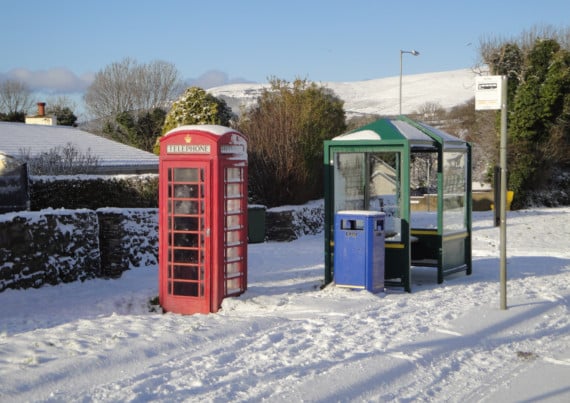
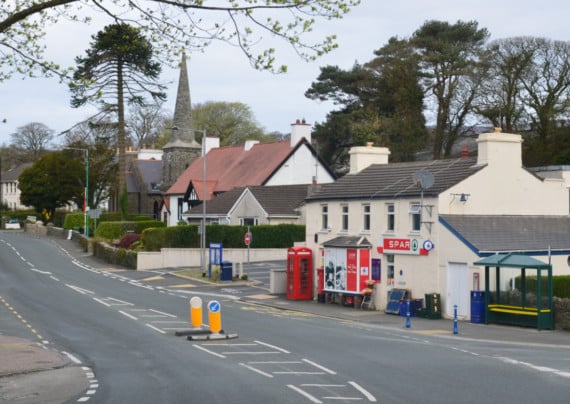
Statutory notices of closure posted in nearly half the island’s public telephone kiosks in April 2021 is a stark reminder that the end of the traditional red telephone box could be in sight, writes Dermot O’Toole.
A frequent topic of debate among conservationists, it is no secret that the once ubiquitous public payphone is disappearing at such an alarming rate that it will soon be confined to history and likened to finding the tomb of Tutankhamun.
In fact, the day is not far away when you’ll have to visit a heritage centre to remember what a red telephone box once was!
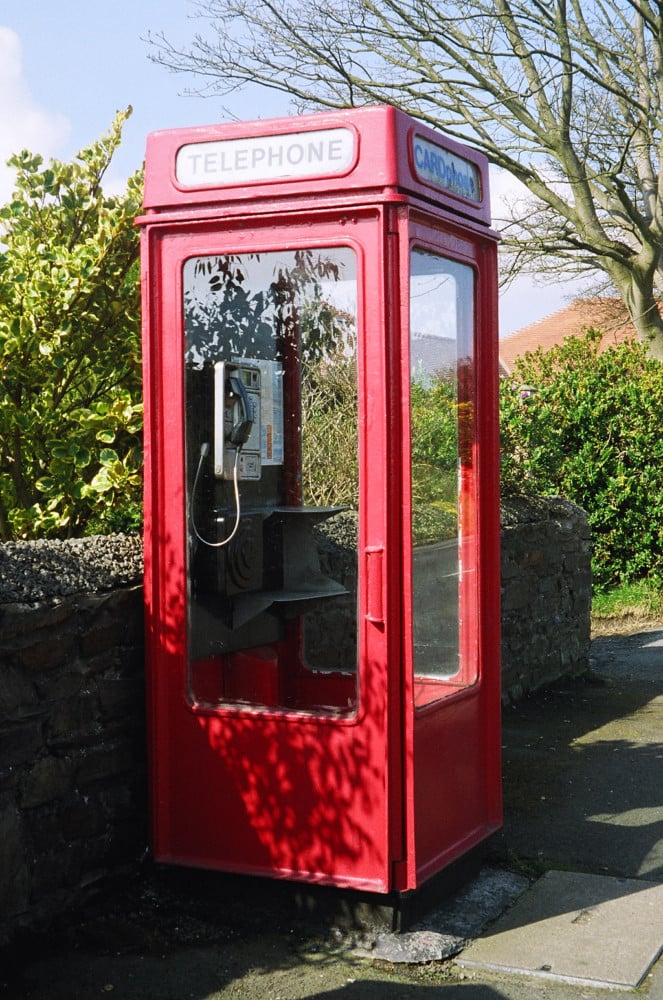
Designed by the eminent church architect Sir Giles Gilbert Scott in 1935, few at the time, including himself, realised the cultural icon it would become and the longevity it would enjoy.
.jpg?width=209&height=140&crop=209:145,smart&quality=75)



’The new telephone box will be known as the Jubilee kiosk,’ the West London Observer reported on Valentine’s Day, 1936.
’It is to have accommodation for umbrellas, a receptacle for handbags and an ashtray for those wishing to smoke.’
Even more complimentary, the West Middlesex Gazette described Scott’s venerable creation as having every modern convenience except running hot and cold water!
With its cheerful hue by day and its welcoming bright light at night, the ubiquitous K6 quickly became a prominent landmark and symbol of promise from the Post Office to provide communication from the remotest corners of the land.
With low production and maintenance costs, it was introduced onto the streets of Britain in 1936 as part of the ’Jubilee Concession Scheme’ that promised to provide improved telephone facilities to every town and village with a Post Office.
But storm clouds were gathering over the future of Britain’s public telephone service.
By the late 1970s, the General Post Office had become another thread-bare, state-owned utility the Thatcher government was eager to sell off.
After 69 years of government ownership, the monopoly of Britain’s telephone service came to an end in 1981 when the Post Office divided, and British Telecom was born.
Privatised in 1984, British Telecom announced a £160million modernisation programme with a firm commitment to replacing all 78,000 cast-iron telephone kiosks with a ’state of the art’ kiosk suitable for the twenty-first century.
But there was widespread opposition to the removal of Britain’s traditional red telephone boxes.
In his book Telephone Boxes, published in 1989, the late architectural historian Gavin Stamp, chairman of the Thirties Society and much involved in the campaign to preserve the iconic telephone box from extinction, wrote: ’The systematic destruction of Scott’s kiosks is so tragic.
’No vandalism metered out so quickly to a kiosk by an individual has equalled that practiced systematically by British Telecom.
’Sound and serviceable kiosks with years of life in them have been uprooted, sold off at auctions, perhaps to end up as shower cabinets in the United States.’
Aware of public dissatisfaction with British Telecom’s new corporate image and their licence to operate on the Isle of Man soon to expire, the Manx Government announced in 1985 that it would be awarding a 20-year licence to operate the telephone system in a tender process.
Commencing operations under its new identity on January 1, 1987, Manx Telecom’s modernisation programme included the replacement of ageing or damaged K6s with a new type of kiosk. Although more anonymous, but with a door and sides that failed to reach the ground, critics considered the KX100 to be a badly designed substitute of what one could expect to find on the far side of the Atlantic.
A frequent target for vandalism, some would say that much of the violence inflicted to phone boxes was richly deserved rather than gratuitous.
They didn’t always work well either and when they swallowed your coins without keeping their part of the bargain, it was hard not to retaliate.
Whoever perpetrated it, the vandalism created a vicious circle, so you couldn’t tell whether phone boxes had been vandalised because they weren’t working or weren’t working because they’d been vandalised.
Although Manx Telecom has been accused in some quarters of cultural vandalism for the removal of so many uneconomic phone boxes, much of that criticism is unjustified. It’s all very well campaigning for retention of the red telephone box, but how many of us can remember the last time we made a call from one?
In defence of their recent policy to dispense with telephone kiosks unable to meet the threshold of 40 chargeable calls per year required to keep them in service, Manx Telecom has provided local authorities with an opportunity to purchase a decommissioned kiosk for a nominal figure, albeit without a phone, and then convert it into an honesty box for the sale of newspapers, groceries and an assortment of other offerings.
Alternatively, the communication provider has indicated its willingness to retain a non-profitable payphone if a local council or authority is prepared to finance its annual upkeep. Other than the phone box at Derbyhaven and Cregneish, both of which received sponsorship for an undisclosed amount in 2014, the ’Adopt a Public Call Box’ scheme has received only limited success.
The systematic removals of these icons of the past will no doubt continue.
Nevertheless, whenever I travel through the Manx countryside and sight a red telephone box, I still have a curious fascination for them and have a good cause to be grateful for the service they still provide.
I visit and photograph them, have written a book about them, and even have a fully refurbished one in my back garden!
Of the 79 public telephone boxes still in use on the island, a mere 49 are of the vintage type we’ve all come to love.
Financially unsustainable with each passing year, the era of the public payphone is drawing to a close, its future uncertain.
For the time being at least, Scott’s legacy lives on - its classic design symbolic of Britain’s past.
It’s hard to imagine our island without its red telephone boxes and the few still standing will have to prove their economic viability if they are to survive.
Comments
This article has no comments yet. Be the first to leave a comment.