

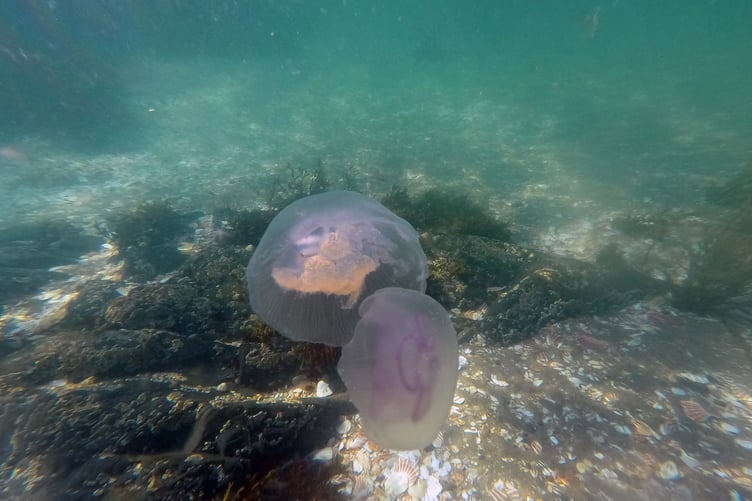
Anyone who has been in or on the sea this summer will have noticed a large number of jellyfish floating around.
It looks like the prolonged warm conditions has attracted a large number of marine life from algae up to good basking shark numbers.
It also means we have seen more jellyfish which some of us will have to have kept a close eye on while having a dip.
Jellyfish are 95% water and have no brain, blood or heart but should be treated with respect.
While many of us instinctively avoid jellyfish in the water, not all species pose a risk. However, some can cause painful stings and should be treated with caution.
Last year, Media IoM spoke to Dr Peter Duncan, senior marine environment officer at the Department of Environment, Food and Agriculture (DEFA).
Here is a list of the jellyfish you might see and whether they can sting.
Lion’s mane
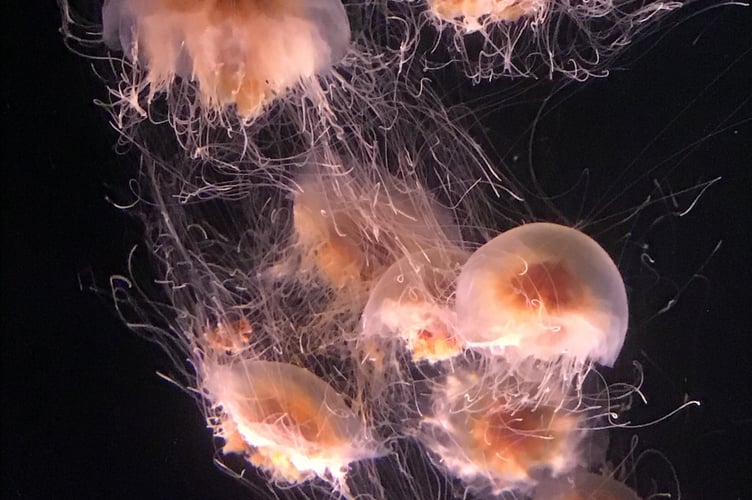
These are the jellyfish you really should avoid and frankly move well away from as it also has very long tentacles.

.jpeg?width=209&height=140&crop=209:145,smart&quality=75)

‘The lion’s mane jellyfish is potentially large, red in colour and, importantly, has very long trailing tentacles that can cause a painful sting,’ Dr Duncan said, ‘which can be severe if there are multiple stings or a person is particularly susceptible.
‘Because the tentacles can be several metres long, you might not even see the jellyfish, so be aware of long, thin white strings in the water, or if people nearby report stings.
‘They can also be found stranded on the beach, but should be left alone, because they can still sting.’
Even fragments of the tentacles can sting even if no long attached to the lion’s mane.
If you are stung scrape the area with a clean stick or remove the tentacle with tweezers if you have them to hand, then rinse the area with warm to hot water to reduce swelling. If it gets worse consult your GP.
Compass jellyfish
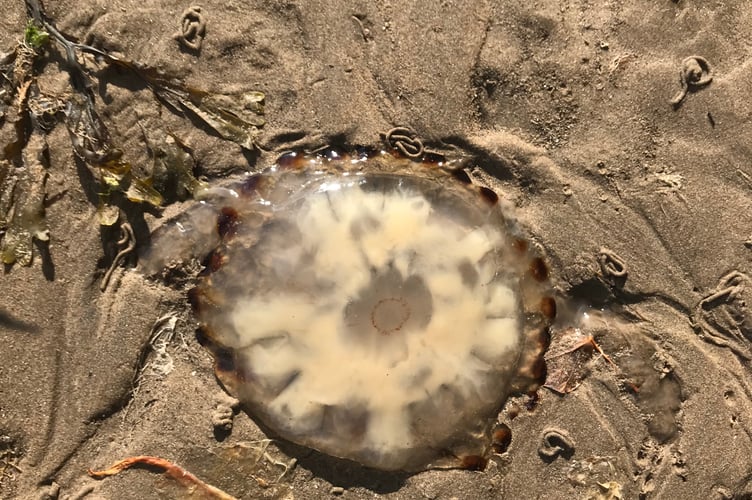
Dr Duncan also highlighted the compass jellyfish as another local species that can deliver a painful sting.
‘It’s so called because its brown radiating lines resemble a compass rose,’ he said. ‘Although not as large or long as the lion’s mane, it’s still quite big and should be avoided in the water and on the beach.’
Similar to the lion’s mane, try and scape off or remove any remaining tentacles and bath in hot water. Vinegar can also be used to treat the sting.
Blue jellyfish
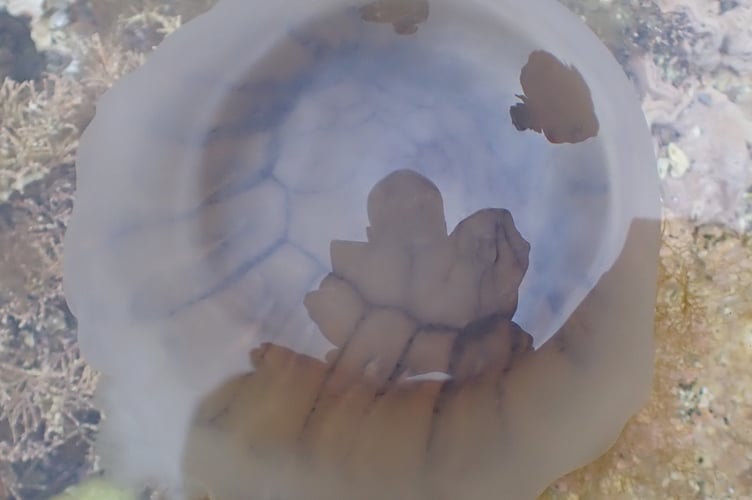
Quite a few of these have been floating around the Manx coast recently. They are similar in shape to a ion’s mane but are smaller and have a striking blue colour.
These jellyfish also sting but is not as severe as the lion’s mane and compass jellyfish, causing a rash and itching which usually eases after a day. Again, the sting should be treated by scraping off remaining tentacles and treating with warm/hot water and vinegar.
Moon jellyfish
.jpeg?trim=0,38,0,38&width=752&height=501&crop=752:501)
These a ghostly look creatures and can be found in large blooms making the water look like jellyfish soup. They are found the world over.
The moon jellyfish sting is very mild and only causes minor irritation.
Barrel jellyfish
.jpeg?trim=0,14,0,14&width=752&height=501&crop=752:501)
This species is striking because of its large size, often the size of dustbin lids. They are a favourite food of leatherback turtles.
Despite their intimidating size, the sting is mild and only causes mild burning and a rash. They should be treated by removing tentacles and bathing in warm water. Vinegar should be avoided as it can actually release more venom.
Mauve stinger
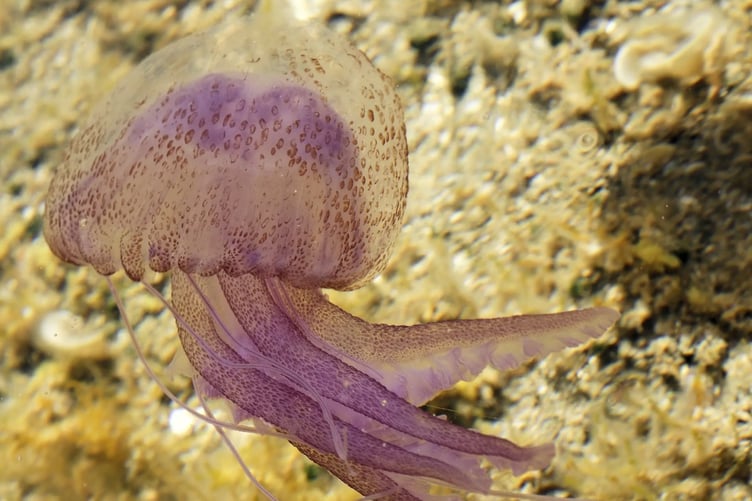
This strikingly colourful jellyfish is a rarer visitors to Manx waters and usually found further out to sea.
These can also pack a powerful sting more in keeping with a lion’s mane and should be avoided. Stings should be treated in a similar way to lion’s mane stings.
Not all jellyfish are harmful, and many play an important role in marine ecosystems.
‘They provide food for several species, including the leatherback turtle, a rare visitor to the Isle of Man, and even offer shelter for juvenile fish,’ Dr Duncan said.
‘Being in the middle of the Irish Sea means the Isle of Man has a good jellyfish diversity. Most of our jellyfish are harmless, with mild or no noticeable sting.’
Dr Duncan also warned against a common misconception around jellyfish stings.
‘The first thing to say is – don’t pee on them! That’s a myth,’ he said.
‘If you do get stung by lion’s mane or compass jellyfish, the advice is to leave the water as soon as possible, rinse the affected area with vinegar (rather than sea water) to deactivate the stinging cells, and then bathe in hot water at bath temperature to relieve the pain.’
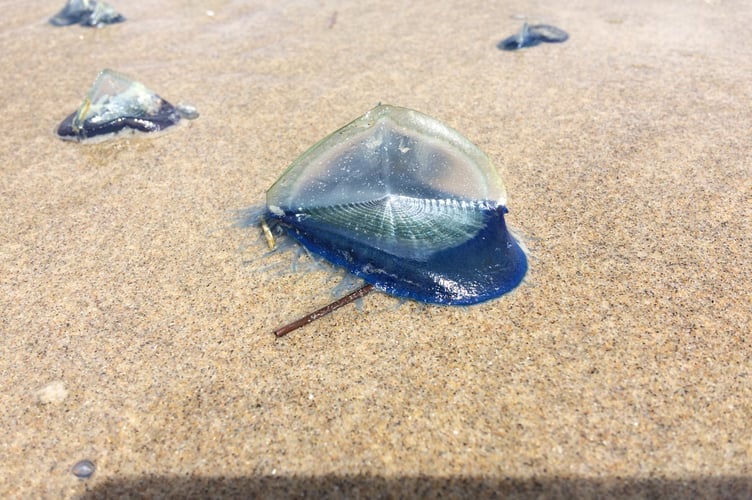
There are also occasional sightings of colonial jellyfish, which are not true jellyfish, such as the by-the-wind sailor and Portuguese man o’ war. These are uncommon around the island, but should be avoided if encountered as they also deliver a powerful sting.
Comments
We've recently changed our login process. If you have an account for commenting, you will need to re-register on the login window.
This article has no comments yet. Be the first to leave a comment.