
A disease that threatens a wide variety of plants and trees is now prevalent in the Isle of Man, despite drastic measures taken to curb its spread in recent years.
Phytophthora ramorum, colloquially known as sudden oak death, remains a problem across the island according to a spokesman from the forestry division of the Department of Environment, Food and Agriculture.
It’s one of three diseases threatening the island’s trees.
The first case of chalara ash dieback was confirmed last week. It’s thought to have reached the island either from airborne spores or imported plants. Dutch elm disease first appeared in the island in 1992.
.jpeg?width=209&height=140&crop=209:145,smart&quality=75)
.jpg?width=209&height=140&crop=209:145,smart&quality=75)

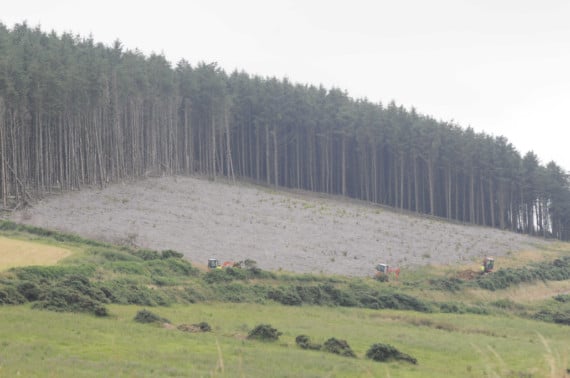
A DEFA spokesman said: ’Phytophthora ramorum is widespread across the island and affects many varieties of plants and trees. A significant portion of the known infected area within the forest estate has been felled and will be replanted over the next few planting seasons.
’But management of the disease is still a priority for the department. Larch trees spread the disease at a rate unlike most other susceptible plants and they will ultimately succumb to it themselves.’
He said the disease should actually be referred to as phytophthora ramorum as the term sudden oak death is misleading. It can affect more than 100 different species of plants, including hardwood and conifer trees, shrubs such as rhododendron and ferns. On many plants, symptoms are leaf spots and dieback but it is not lethal.
The disease was first noted in the island in 2010 and in 2014 plans were announced to fell 1,111 acres of larch trees.
Currently foresters’ efforts are concentrated in the worst affected areas. They say a ’significant proportion’ has been dealt with. Many felled areas have been replanted with sustainable and disease resistant species. Felled larch trees in Chibbanagh have been replaced with a mix of broadleaf trees, with the exception of two smaller areas. A spokesman said these were being assessed for restocking, but could be left as open land.
All the plantations remain open to the public and restrictions are only imposed during felling and clearing work, but walkers have been reminded to take precautions. These include wearing clean footwear, washing down cycle and car tyres after off-roading, keeping to paths, observing information signs, not taking plants and cuttings from the countryside or dumping garden waste there. More information is available at www.forestry.gov.uk/biosecurity
The public has also been reminded to be on the lookout for symptoms of Dutch elm disease and report suspected cases on [email protected] or text 490713. The disease first appeared in the Isle of Man in 1992. It has been strictly managed and has so far affected just 1%of the island’s elms, in stark contrast to the UK which lost 90% of its elm trees between 1968 and 1980.
Symptoms include wilting and yellowed or discoloured leaves and retention of dead leaves on branches.
Comments
This article has no comments yet. Be the first to leave a comment.