
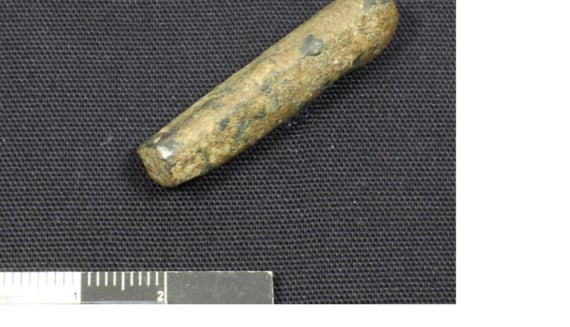
A small piece of Viking age silver that was found in the south of the island has been declared treasure.
Coroner of Inquests Jayne Hughes ruled that the ingot, found by metal detectorist Lee Morgan, does qualify as treasure and he will be rewarded after it is valued next year.
The silver ingot, dating back between AD950 and 1075, was found in a field in the south of the island by Mr Morgan in September.
The location of the field was not revealed to protect the integrity of the site and because the land is in private ownership.

.jpeg?width=209&height=140&crop=209:145,smart&quality=75)

.jpeg?width=209&height=140&crop=209:145,smart&quality=75)
Mr Morgan and the landowner will split any reward 50/50 as part of a verbal agreement reached before the find.
Ingots like the one found were often used as currency by Viking traders who would weigh and test them to make sure of the silver content when using them for the purchase of goods.
The one found weighs 17g and is 3.5cm in length. It shows signs of having been cut from a larger piece of silver and while not 100% pure, Manx National Heritage was satisfied it contained a large amount of silver.
Allison Fox, curator of Archaeology at MNH, said ingots were used as a ’cross-border currency’, adding: ’If a Viking was in a place that valued silver, ingots could be used. During the later Viking age, ingots were used alongside coinage.
’This ingot may only be a small artefact, but put into context, it helps illustrate how the Isle of Man was a part of the international Viking trade network 1,000 years ago.’
Manx National Heritage also extended its thanks to Mr Morgan for finding the ingot and to him and the land owner for going through the treasure trove process.
In the island, when archaeological finds are made in the island, it must be, by law, reported to MNH.
If the artefact is more than 300 years old and contains more than 10% metal, then the coroner of inquests must also be informed to decide whether or not it does qualify as treasure. If it is then a reward is usually paid to the landowner and the finder.
Mr Morgan didn’t appear at the hearing, however Mrs Hughes accepted his written evidence and the evidence of MNH in ruling it was treasure that was either put in the ground deliberately or lost.
The ingot will go on display at the Manx Museum until February when it will go to the Treasure Valuation Committee in London.
Comments
This article has no comments yet. Be the first to leave a comment.