
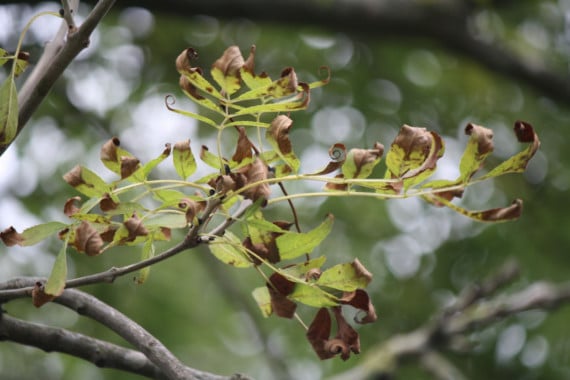
Environment Minister Geoffrey Boot says its too early to say what impact will be on the island’s plantations following the arrival of a disease a tree that can be fatal for ash trees.
In July, the government urged landowners to be vigilant and report possible cases after the presence of Chalara ash dieback disease was discovered on private land in the south of the island.
The disease, caused by a fungus, was detected in the UK in 2012 and is well-established there.
Mr Boot said: ’We do not yet know what the full impact of Chalara Ash Dieback will be in the Isle of Man. Having only recently been confirmed in the island it is too early to give predictions or assumptions on its impact to the island’s ash tree population at this time.
.jpeg?width=209&height=140&crop=209:145,smart&quality=75)

.jpeg?width=209&height=140&crop=209:145,smart&quality=75)

’Young trees will tend to succumb very quickly. However, some trees will show disease resistance for several years, while others may demonstrate complete resistance and continue to provide their landscape and wildlife benefits for some time.’
There is no cure or recommended treatment for the disease, which Mr Boot said would be ’impossible to eradicate’.
Department of Environment, Food and Agriculture officers will monitor the spread of the disease and try to identify possible disease-resistant specimens.
Mr Boot was responding to a written Tynwald question from Juan Watterson (Rushen), who also wanted to know about the impact of Phytophthora Ramorum, a fungus-like disease that can have a devastating effect on larch trees and areas of sweet chestnut.
The minister said: ’The greatest impact has been seen in the department’s larch component of its forest areas.
’In reaction to the disease and following best practice guidance from the UK’s Forestry Commission, the department continues to prioritise its felling programme to these areas.
’There have been occurrences of the disease on susceptible plants in private ownership and, where required, professional advice has been given to the landowner.’
He said, with the exception of a couple of areas, 250 acres of the forestry estate had been affected.
’Replanting of all felled areas has commenced and will continue as existing budgets allow,’ he said.
’Opportunities for diversifying tree species, improving landscape aesthetics, enhancing biodiversity values will all be considered in the site planning process.’
Comments
This article has no comments yet. Be the first to leave a comment.