

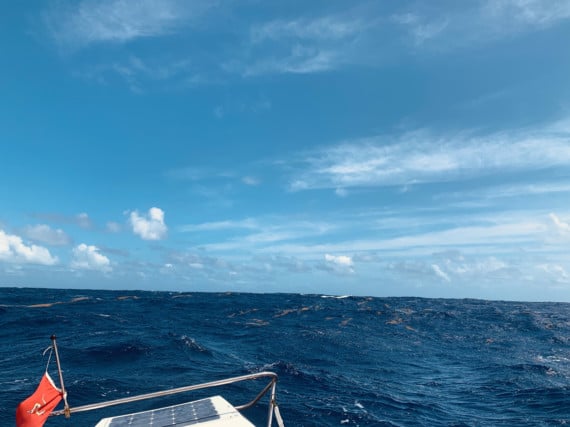
Last week, Andrew talked to us about how difficult the first part of his journey was.
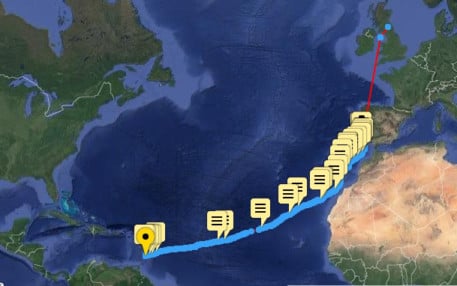
But once he had cleared the rough waters around the Canary Islands - including one episode with brutal currents which he dubbed ’The battle of Lanzarote’ - things were smoother going in the open ocean.
He said: ’After clearing the [island of] Fuerteventura, it was almost like the ocean said: "Ok, now you can cross the Atlantic now if you want!"
’And it was pretty much plain rowing from then on’.

.jpeg?width=209&height=140&crop=209:145,smart&quality=75)
Andrew began to appreciate the journey more and take each problem as it came.
’Every challenge that the ocean put in front of me, I did it.
’But sometimes I was confused, I didn’t know what to do, I was tired.
’Sometimes I’d be scratching my head, and I’d go back in the cabin and sit there and think "what am I going to do now?".
’But you’d figure it out, because you’ve got to.’
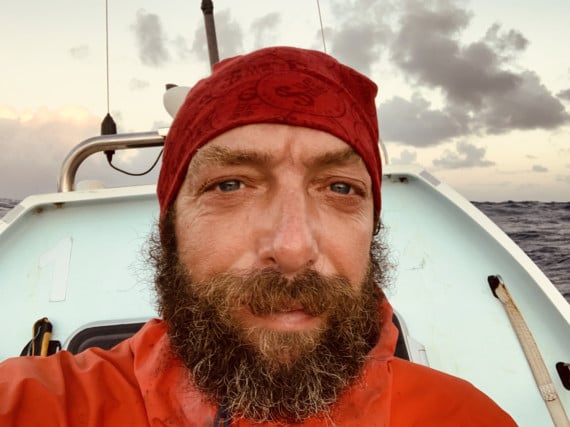
Despite the daily challenges he was facing, Andrew said he became less irritated by things such as getting soaked by rogue waves and more inquisitive about nature.
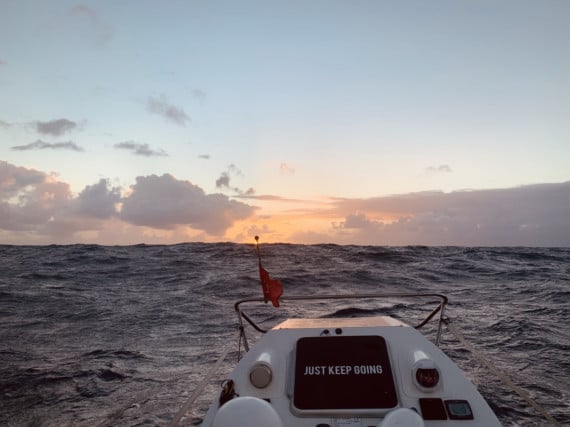
’Even the clouds, I was thinking "why didn’t I pay attention in geography class?"’, he said.
’I could have understood what all these different types of clouds meant - I became very interested and determined to learn more when I got back.
’To Google things about the clouds, and the waves and the stars - and to not spend time looking at Amazon for something to buy. ’
He also found himself in the midst of a sudden abundance of marine life in the stretch of ocean between Gran Canaria and Cape Verde - including wales, sharks and dolphins.
Reflecting on the key lessons that he brought back from the journey, Andrew said: ’The first one is to live in the now.
’Forgive your past, and understand that your future is determined by whatever you do today.
’There’s no point daydreaming all day about tomorrow, because what you do today will determine how good your tomorrow is.
’And be aware of the impermanence of things.’
We asked Andrew what comforts he had been most looking forward to once he got home, and if there was anything he now had a newfound appreciation for.
He said: ’[I learned] the appreciation of the simplest of things.
’The first thing I did when I landed was have a shower.
’Do you realise how amazing a shower is?
’It was just absolutely blissful.’
’The other thing was to have cold, refrigerated fruit.
’I had melon and pineapple and I’ve never eaten anything so good in all my life.’
’And to have a cold drink as well, it was only some Mountain Dew or something, but it was cold, and it was just phenomenal.
’To have a fridge and a shower, to have a tap and a toilet, to have a kettle - these are things that we take for granted every single day.
’Whilst we’re all out looking to get the latest iPhone, it’s worth just appreciating some of the other things that we have that we take for granted.’
He added the fact that every movement was made challenging on the small, rocking boat - from standing up to get a phone signal, to going to the bathroom - had given a newfound gratitude for being able-bodied and having his health.
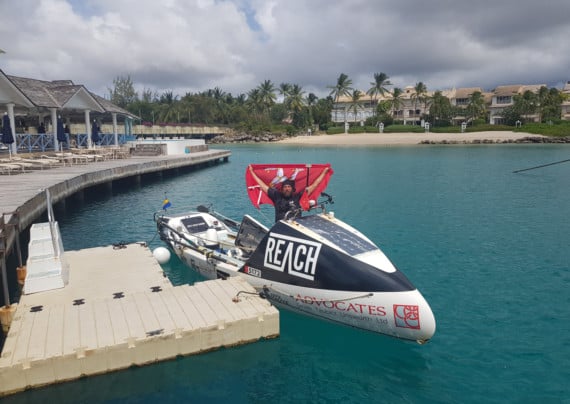
It was two days outside Barbados that he saw his first fellow human being since leaving Portugal 96 days ago.
It was a fisherman named Richard aboard a coincidentally named pleasure craft: ’Wine Down.’
Andrew updated his blog from his boat: ’Was lovely to see a smiling face.
’I very much look forward to visiting our very own Wine Down in Douglas at the soonest chance.
’Love their triple chocolate dessert especially.’
We wanted to know how strange it was to acclimatise back to land once he reached the dock in Barbados, where he was greeted by his girlfriend Lucy, and swiftly provided with a chair to sit down in as a precaution against ’land sickness’.
This is a condition where after a long journey on a moving craft, people still experience disorientation and sensations of motion even after stepping back onto land.
’Physically, I’d never experienced anything like that, the legs just went’, Andrew explained.
’And they were really weak for a couple of weeks, I struggled to walk up stairs.
’My head was all over the place.
’As soon as I got off the boat there was a reporter there, and she was asking me questions - to be honest I couldn’t remember my full name.
’And then there were the customs people, they were asking me questions and I didn’t have a clue. But everyone was having a laugh about it. I was dizzy, I thought I was going to faint, it was the weirdest border crossing that I’ve ever had.
’If I hadn’t sat down I would have fallen down, I was just holding it together for the camera’.
As for mentally readjusting to the hectic society, he said: ’Barbados is a very quiet place, and quieter during Covid because there are no tourists there.
’However, we then had to travel quite a lot to get back to the island. And there was a lot of hustle and bustle, a lot of airports and ferries.
’And that was quite disturbing. In Barbados supermarkets even freaked me out a bit, there was just so much stimulus and so many things you could get.
’I’m going to have to process that a little bit, how I shop in the future.
’Because we don’t need a lot, really quickly you get used to not having much.
’And it’s not difficult, when you don’t have the option [as with the rations on the boat] and your brain just adjusts to it.
Since getting back to the island however, he said: ’All I have done is eat. You see it, and I eat it, what do they call it, the "See-food" diet?’
He said that the next big mental shift will be getting back to work, and at that point it might almost seem as if the journey had never happened, as it is such a surreal experience to look back on.
Andrew said he would be interested in giving talks at schools or other Manx organisations, and as for his boat Aurelia, she is now being shipped home.
He is also looking forward to seeing how the donations will be put to good use by the two mental health charities, Reach IoM and Whilstleblowers IoM, and Manx Wildlife Trust - which he chose because of the positive effects of nature on mental wellbeing.
l People can still donate to at: www.justgiving.com/crowdfunding/reachintotheblue
Comments
We've recently changed our login process. If you have an account for commenting, you will need to re-register on the login window.
This article has no comments yet. Be the first to leave a comment.