
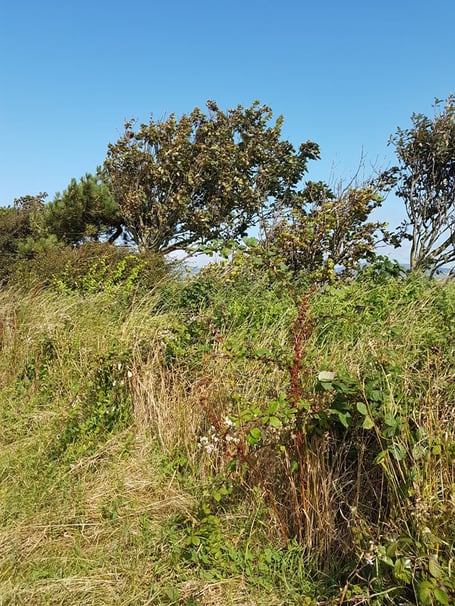
Hedgerows can prevent soil erosion, capture pollutants, store carbon to help combat climate change, and provide homes for predators of many pest species.
They also provide vital links across the countryside for wildlife by being used as nature highways around the Isle of Man, helping nature to move about freely and keeping animal populations healthy.
Here are a few Manx hedgerow facts courtesy of the Manx National Farmers’ Union.
Half of the 1,107km of Manx roads are bordered by hedgerows and approximately one fifth of the roadside hedges are trimmed for road safety only on one side.




Farmers and land managers look after the other 98.75% of Manx hedgerows in line with the Hedgerow Code, maintaining great habitats for nature.
Because of the summer trimming the more aggressive hedgerow species of such as docks, jinny nettles and bramble can’t get a good hold.
This then allows the wildflowers to come back every year and flourish, filling the roadside hedgerows with the colours that create the beautiful hodgepodge of roadside hedges that everybody loves.
With nectar-rich blossom in the spring, insects buzzing in the dense thickets in summer and red berries abounding, in autumn, hedgerows provide wildlife with a rich larder.
Hedgerows are often a mix of shrub and tree species such as hawthorn, blackthorn, hazel, ash and oak, interwoven with climbers like traveller’s-joy and honeysuckle.
Banks and ditches fill with flowers like hedge bedstraw and red campion, and butterflies, such as the rare black and brown hairstreaks, purple emperor and pearl-bordered fritillary, use them for nectar or to lay their eggs.
Mammals, including hedgehogs, nest and feed in hedgerows, and bats, such as the greater horseshoe and Natterer’s bats, use them as green ’commuter routes’ for foraging and roosting.
Woodland and farmland birds such as blue tit, great tit and whitethroat can be found along the hedges.
Comments
This article has no comments yet. Be the first to leave a comment.