
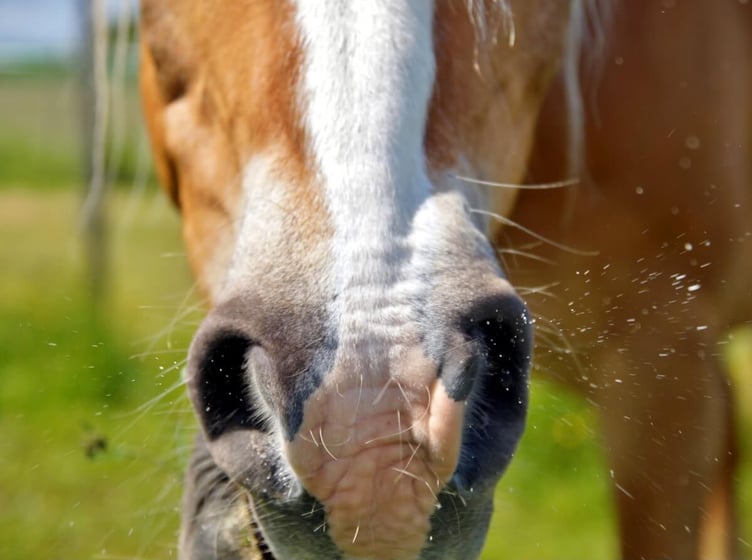
Whilst avian influenza has been high on the animal welfare agenda for the past few years, now equine influenza is hitting the headlines due to a recent spike in cases in the UK.
‘Horse flu’, as it’s also known, is highly contagious and can be deadly in horses, ponies or donkeys that are already compromised due to being very young, old, or already affected by a respiratory illness.
If an otherwise healthy horse becomes infected the prognosis is less serious, but ‘flu’ can lead to life-long health issues - there is a risk that permanent damage may occur to the heart muscle and other organs; and the weakened immune system can trigger secondary bacterial infections leading to complications such as pneumonia, bronchitis and swelling of the lower limbs.
So, the horse world needs to take this matter very seriously.

.jpeg?width=209&height=140&crop=209:145,smart&quality=75)


Signs of equine influenza include: an increased temperature which can happen before any visible signs are apparent (horse owners can visit the British Horse Society (BHS)’s website for further information on how to take a horse’s temperature and to establish what a normal temperature should be); a frequent dry, harsh cough; a clear, watery nasal discharge that may become thick and green/yellow a few days later; loss of appetite; lethargy; swollen and painful glands under the jaw; and ‘gagging’ when eating.
If an owner suspects their horse has the disease, they should isolate the animal immediately and seek veterinary advice.
As with all illnesses, prevention is better than cure and responsible owners have their horses vaccinated against equine influenza every year.
However, the BHS estimates that only around 40% of the UK’s horses are vaccinated.
‘Flu’ is an adaptive virus and can change over time, and so even a fully vaccinated horse may not have complete immunity. But they will not be as severely affected and will suffer for less time than an unvaccinated horse.
They will also shed less of the virus, which is airborne, and reduce the risk of spreading the infection to nearby horses.
Other preventative measures include: observing good general hygiene around horses; keeping food and water buckets clean; not sharing equipment (e.g. brushes) with other horses, even if stabled on the same yard; and avoiding direct contact with horses from other yards.
If owners compete with their horses, or they travel between yards, they need to go a step further and disinfect equipment and boots, and change outer clothing.
The Isle of Man Government issued updated advice last week regarding the importation of horses to the island, emphasising that horses that are not fully vaccinated against equine influenza need to be quarantined for a minimum of 14 days after arrival.
During this time the imported animal must not come into direct (nose-to-nose) contact with any other horse, pony or donkey, or be kept in a shared air space with them.
And whilst we’re on the subject of horses, the BHS has been marking the 10th anniversary of its ‘Dead Slow’ road safety campaign which aims to make the UK’s roads safer for vulnerable users.
During 2025 a staggering 2,810 incidents were reported to the BHS’s website, with 59 horses dying and 82 being injured.
Their records show that more than 80% of the incidents occurred because a vehicle passed by too quickly.
The recommended speed for passing a horse is no more than 10 miles per hour, at a distance of at least two meters.
Being considerate on our roads is a mutual obligation, and horse riders need to ensure that they and their horse are wearing as much high-visibility clothing as possible.
They also need to ride with an appreciation of other road users, and stay close together in single file to enable vehicles to drive past more easily; and saying ‘thank you’, with a quick hand signal and a smile, is basic courtesy.